
Guide
Between-patient cleaning for Elk Grove medical offices
A waiting room that looked spotless at opening tells a different story by mid-afternoon. This guide explains who cleans what while patients are still arriving, and what waits until the practice closes.
Who keeps the clinic fresh while appointments run
Patients in Elk Grove judge a practice before anyone calls their name. They notice the chair they sit in, the counter they lean on to sign in and the restroom they use while waiting for a lab draw. During clinic hours that impression belongs to a day porter, a cleaner who stays on the public side of the practice and works through it again and again while the schedule runs.
Between-patient upkeep is a different job from the full clean. Nobody vacuums a waiting room at noon or mops an exam hallway while a provider is walking through it. The porter works quietly around people, catching the fingerprints, spills, empty dispensers and full bins that build up as one appointment follows another, and leaves the deeper work for the crew that arrives after the last patient goes home.
This split matches how a clinic actually fills up. Mornings bring a rush of check-ins, the lunch hour brings staff into the break room, and late afternoon brings parents with children after school. A day porter for your practice times each lap to those peaks, so the room looks its best at the moments the most people see it.
Touch points a porter returns to all day
The porter’s route starts where patients start: the entry door, the push plate and the glass beside it. From there it moves to the reception counter, the pen and clipboard station and the arms of the waiting room chairs. Many hands touch these surfaces in an hour, and wiping them on every loop keeps the front of the practice looking cared for.
Public restrooms get the closest attention. On each pass the porter checks sinks, counters, toilets and the floor, refills soap and paper towels from supplies we bring or the ones your practice keeps on hand, and swaps liners before a bin overflows. A restroom that stays stocked and dry through a full afternoon of appointments tells patients the whole office is looked after.
Smaller details round out the loop. Reading material gets straightened, a dropped tissue gets picked up, a spill near the water station gets handled before someone slips, and litter by the entrance gets collected. Front desk staff know they can flag the porter for anything urgent, which keeps receptionists focused on patients instead of paper towels.
What the nightly crew handles after close
Once the waiting room empties, recurring nightly janitorial visits take over and do the work that cannot happen around patients. Floors get vacuumed and mopped edge to edge, restroom fixtures get a full cleaning, staff kitchens get their counters and sinks washed, and business offices get dusted around the charts and computers left on desks.
Practice size sets how often that full clean happens. A single-provider suite with a light appointment book can stay ahead with evening visits on set nights each week, while a practice whose chairs fill all day needs the crew every night. Pairing nightly cleaning with a daytime porter means the public rooms never drift for long, and our guide to choosing a day porter or a nightly crew walks through how the two fit together.
Clinical rooms follow your own procedures
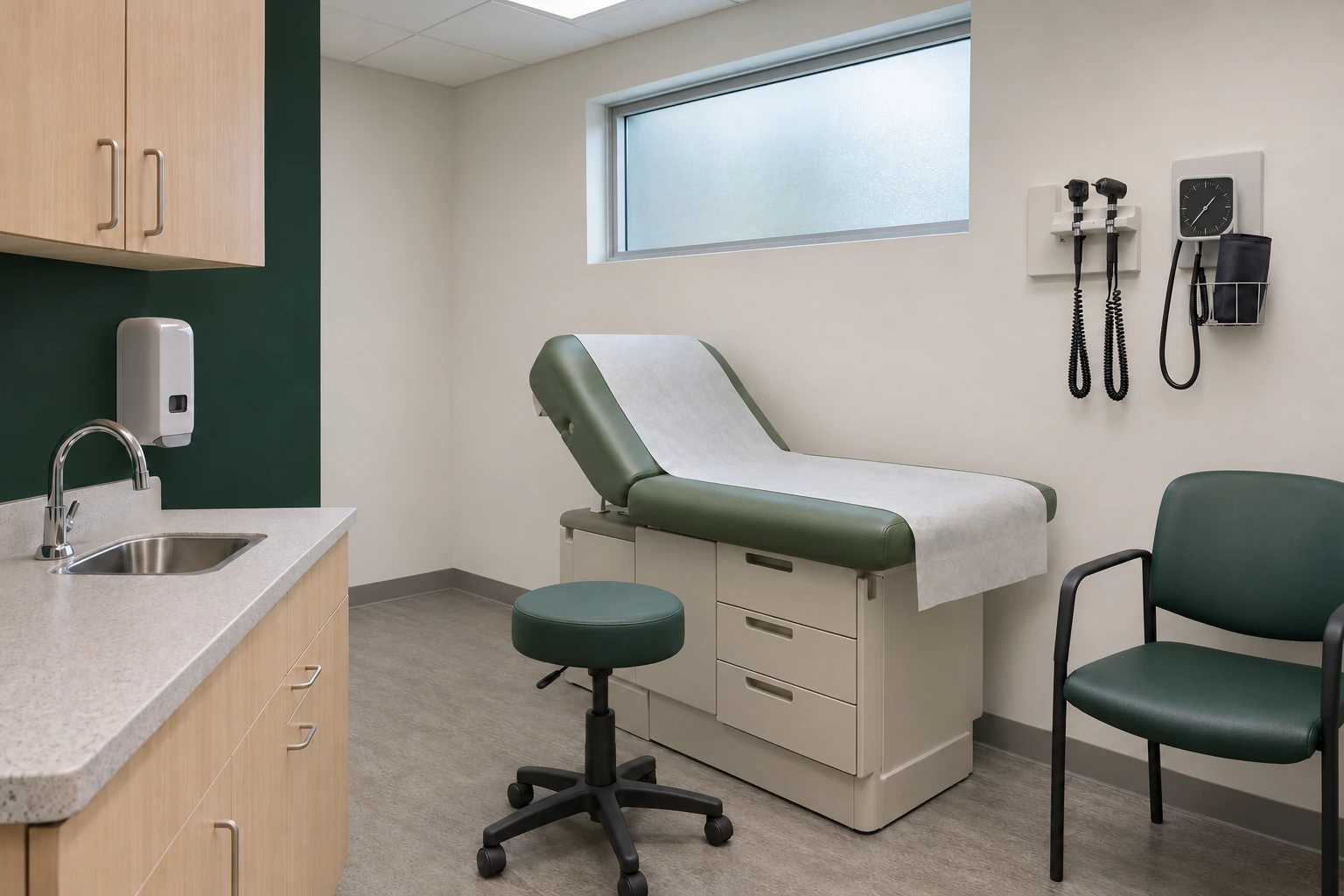
After hours, our crew cleans exam rooms, procedure rooms and other clinical spaces to the protocol your practice sets, with terminal cleaning for the rooms you book it for. Each surface gets an EPA-registered disinfectant that stays wet for its labeled dwell time. The porter’s daytime loop stays in public areas and never wanders into rooms where care is underway, so nobody has to improvise. Our medical office cleaning page explains how that clinical track is set up.
Planning coverage at the walkthrough
Every quote starts with an on-site walkthrough, and for a medical office that visit is where the two tracks get mapped out. Walk the suite with us on an ordinary clinic day if you can, so we see where patients wait, which restroom takes the heaviest use and where the line forms at check-in. Those observations set the porter’s hours and the order of the loop.
Have your clinical cleaning procedures and approved products ready to share, and show us storage that stays locked. Explain how staff mark a room ready or closed and which hours bring the biggest patient rush. With that in hand, the plan fits together from the first week: porter shift, nightly visits and clinical room list all pulling in the same direction.
Quick answers
How often should a porter loop through a clinic waiting room?
Shorter loops during the morning check-in rush and the after-school hours keep the room fresh when it is fullest. Quieter stretches of the day can run on longer loops.
Who cleans exam rooms during clinic hours?
Our evening crew cleans exam and procedure rooms to your protocol once the last patient has gone. During clinic hours the porter’s route covers the waiting room, reception, restrooms and other public areas.
Can a practice use a porter only on its busiest days?
Yes. Porter hours can be set around the days and times that bring the most patients, with nightly janitorial handling the full clean.
What should we have ready for the walkthrough?
Bring your clinical cleaning procedures, the products approved for those rooms, how staff mark a room ready and a sense of your busiest appointment hours.
Industries
Related industries
Services
Related service
Set up janitorial care in Elk Grove
Say how big the building is and whether it needs nightly crews, a day porter, floor care or all three.