
Guide
Strip, refinish or extract? Floor care timing in Elk Grove
Routine vacuuming and mopping keep floors clean, but they cannot restore a worn finish or lift soil that has worked deep into carpet. This guide explains how to tell when a floor needs more, and what each treatment does.
How often should Elk Grove floors be stripped and waxed?
Strip and wax a resilient or VCT floor when its finish has worn through, yellowed or built up too thick to save, rather than on a fixed date. Traffic decides how soon that day comes: a school corridor or clinic hallway gets there much faster than a back office. Regular burnishing and scrub-and-recoat visits push the next full strip far down the calendar.
The signs further down show where your floors stand today, and our comparison of a full strip and a scrub and recoat sets the two projects side by side. Floor projects can join the same plan as your commercial cleaning in Elk Grove, so one crew keeps an eye on the finish all year.
Why routine cleaning eventually hits a limit
Every floor in a working building takes a beating. Staff arrive with grit on their shoes, students drag chairs across classroom tile, shoppers roll carts through the entrance and patients walk the same path to the exam hallway all day long. Nightly vacuuming and mopping remove what sits on the surface, but each pass of traffic wears the finish a little thinner or presses soil a little deeper.
Over months, that wear shows up as dull lanes, scuffed corners and carpet that looks gray even right after vacuuming. More mopping will not fix it. The floor needs a different kind of work, matched to its material and to how far the wear has gone.
When a hard floor is past what mopping can fix
Resilient tile and VCT carry a protective finish, and the condition of that finish tells you what the floor needs. If it looks clean but flat, with no shine left after mopping, the surface is ready for burnishing or a recoat. Gray traffic lanes, black heel marks that will not wipe off and grime packed along the baseboards mean the finish is worn and holding dirt.
When the finish has worn through to bare tile, turned yellow or built up in thick, uneven layers after many coats, stripping and waxing is the right answer. Catching the earlier signs keeps the work lighter, since a burnish or recoat takes a fraction of the time a full strip does.
What each hard floor treatment does
Burnishing is the lightest step. A high-speed pad polishes the existing finish and brings back its gloss without adding anything new. It suits floors where the finish is intact but dulled by foot traffic, and regular burnishing keeps a busy lobby or corridor bright between bigger projects.
Scrubbing and recoating go further. The floor is scrubbed to take off the soiled top layer of finish, then fresh coats go down over what remains. This restores protection and shine without taking the floor down to bare tile, and it costs far less downtime than a full strip.
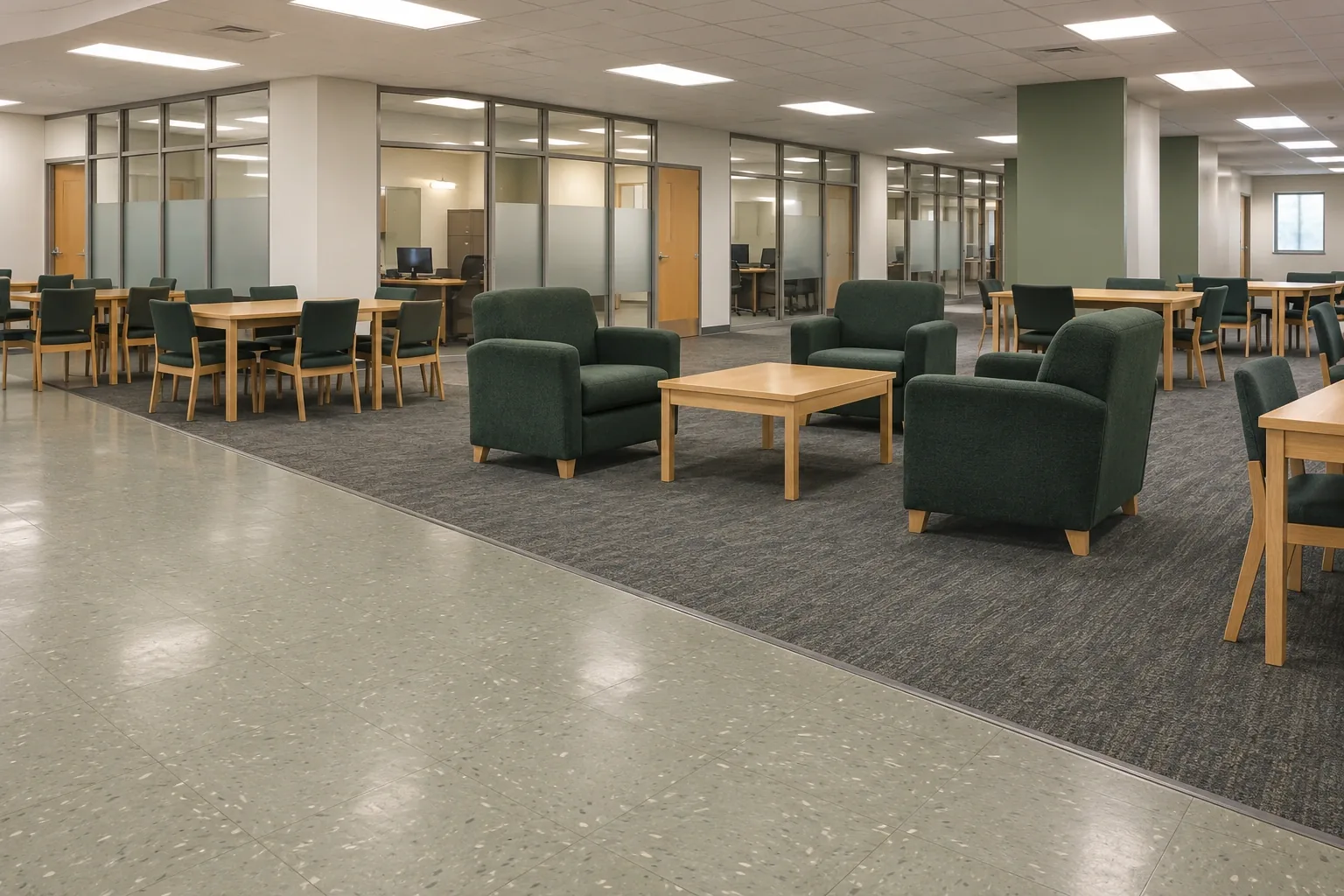
Stripping and waxing removes all of the old finish and builds new coats from a clean start. It is the right call when the finish is too worn, yellowed or layered to save, and because the work and the curing take longer, it is planned for a weekend, a closure or a school break. Concrete and stone follow routines of their own: warehouse and back-room concrete is scrubbed to lift ground-in dirt, and lobby stone is cleaned with products made for stone. Commercial floor care matches each method to the surface in front of it.
When carpet needs deep cleaning
Carpet hides soil well until it suddenly does not. The first signs are darker lanes from the entrance to the front desk, a shadow in front of the coffee station and spots that reappear a few days after being blotted. Vacuuming catches loose dirt, but soil ground into the fibers needs extraction.
Carpet extraction flushes soil out of the fibers and draws it back up, while spot treatment goes after individual stains such as coffee or tracked-in mud. In Elk Grove offices and medical waiting rooms, the path from the door to reception and the route from reception to the back hallway usually need it first, a pattern our guide on between-patient cleaning for medical offices also covers from the daytime side.
Carpet and hard floors often share one building, and both can be handled within the same service. A preschool might have carpet in its reading corners and resilient tile in classrooms and hallways, each surface getting its own treatment on the same visit.
Scheduling floor work around your business
Deeper floor work needs open floor and time to dry. Offices usually book it for a weekend, so floors cure before Monday. Schools and daycares lean on school breaks, when classrooms sit empty for days at a stretch. Retail spaces and clinics pick the days their doors are closed.
Before the crew arrives, clear chairs, bins and small furniture from the floor, lift the mats, and let staff know which rooms will be closed and when they reopen. In larger buildings the work moves in a sequence that keeps a dry route open to restrooms and exits, and a very large space can be split across more than one weekend.
Recurring janitorial visits between projects make a real difference. Keeping grit off the floor each night slows wear, and a crew that sees your floors regularly spots lanes starting to dull, so the next treatment lands on a date you picked rather than one a worn hallway forced on you.
Quick answers
How do I know whether a floor needs a recoat or a full strip?
A finish that is intact but dull comes back with a scrub and recoat. A finish worn to bare tile, yellowed or layered too thick calls for stripping and waxing.
How do we know when office carpet is due for extraction?
Busy lanes in lobbies and waiting rooms need extraction more often than quiet private offices. Darkened paths and returning spots are the best signals that it is time.
Does regular recoating mean fewer full strips?
Yes. Recoating busy lanes before the finish wears through keeps the base coats intact, so the floor goes much longer before it has to come back to bare tile.
Can floor work happen while part of the building stays open?
Yes. Rooms are worked in a sequence that keeps a dry path open to restrooms and exits.
What should we move before a floor project?
Clear chairs, bins, mats and small furniture from the floor, and let staff know which rooms stay closed until the finish has cured.
Resources
Related guides
Services
Related service
Set up janitorial care in Elk Grove
Say how big the building is and whether it needs nightly crews, a day porter, floor care or all three.